Slice Upload Fl Studio Files for Collaboration
Splice Studio is the most simple and powerful way to back up your projects and share them with collaborators. It allows you to travel back in time to whatsoever previous version without taking up precious hard drive space, and projects sync at lightning speed thanks to an encrypted file hashtag that prevents y'all from e'er uploading the same file twice. Everything stays private until the moment y'all make a project public, and Splice doesn't view or mess with the files you lot've saved.
If you're just getting started with Splice Studio, you've come to the right place! In this blog post, we'll be navigating primal features and common questions revolving Splice Studio.
The big picture
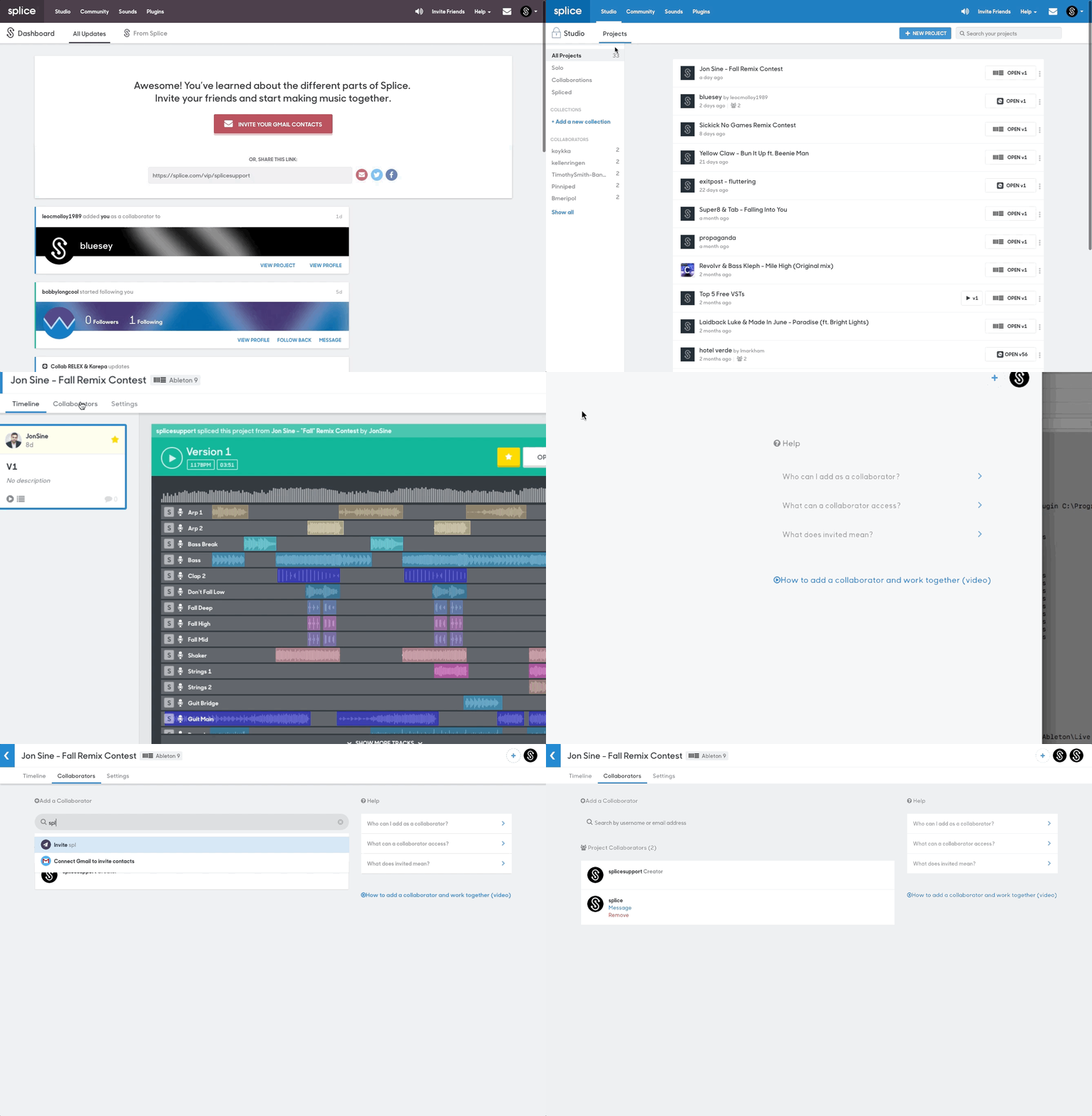
Splice Studio operates using the Splice desktop app in conjunction with the spider web version. Having the desktop app running allows Splice to create time-stamped backups of your work each time you hit "Salve" in your DAW. The website is where you can add collaborators, upload stems, release your tracks to the Splice Community, and more than. From both the desktop app and the website, you can easily open the projection right support in your DAW by striking "Open."
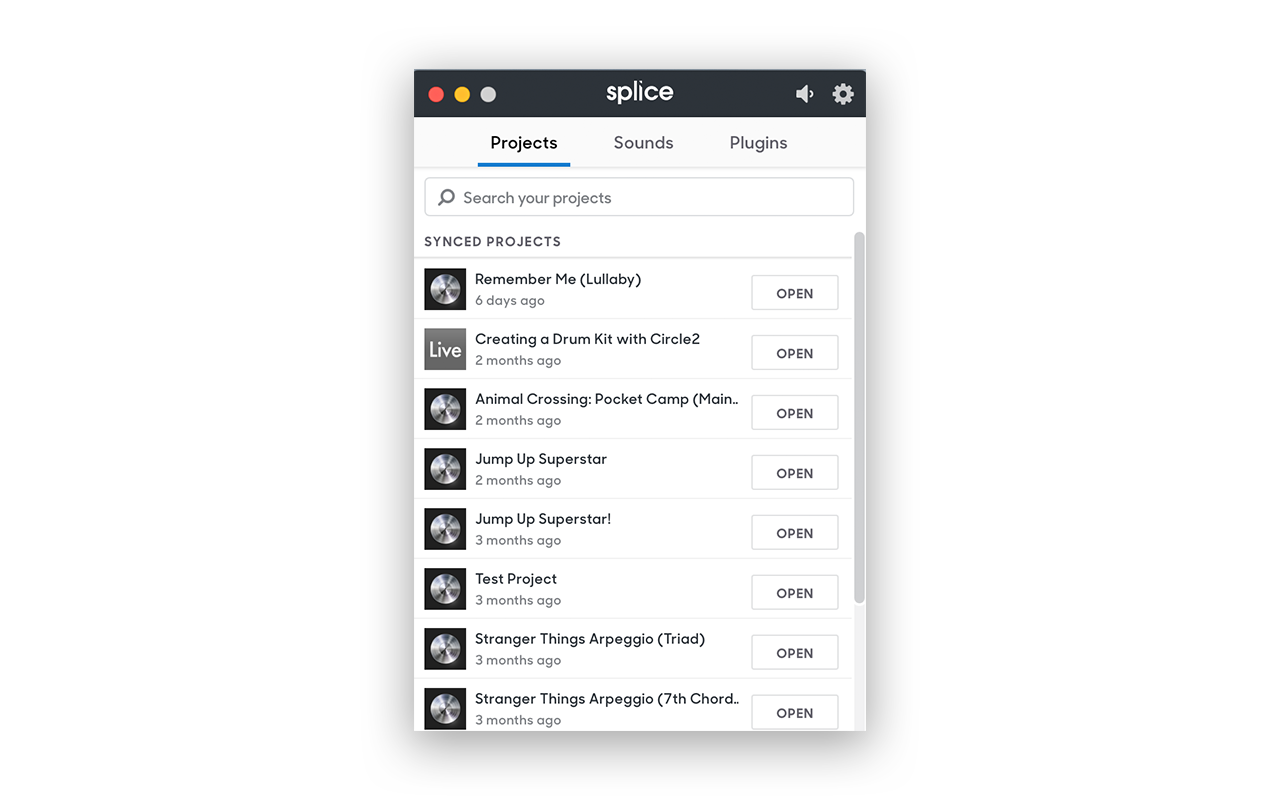
(Splice Studio on the desktop app)
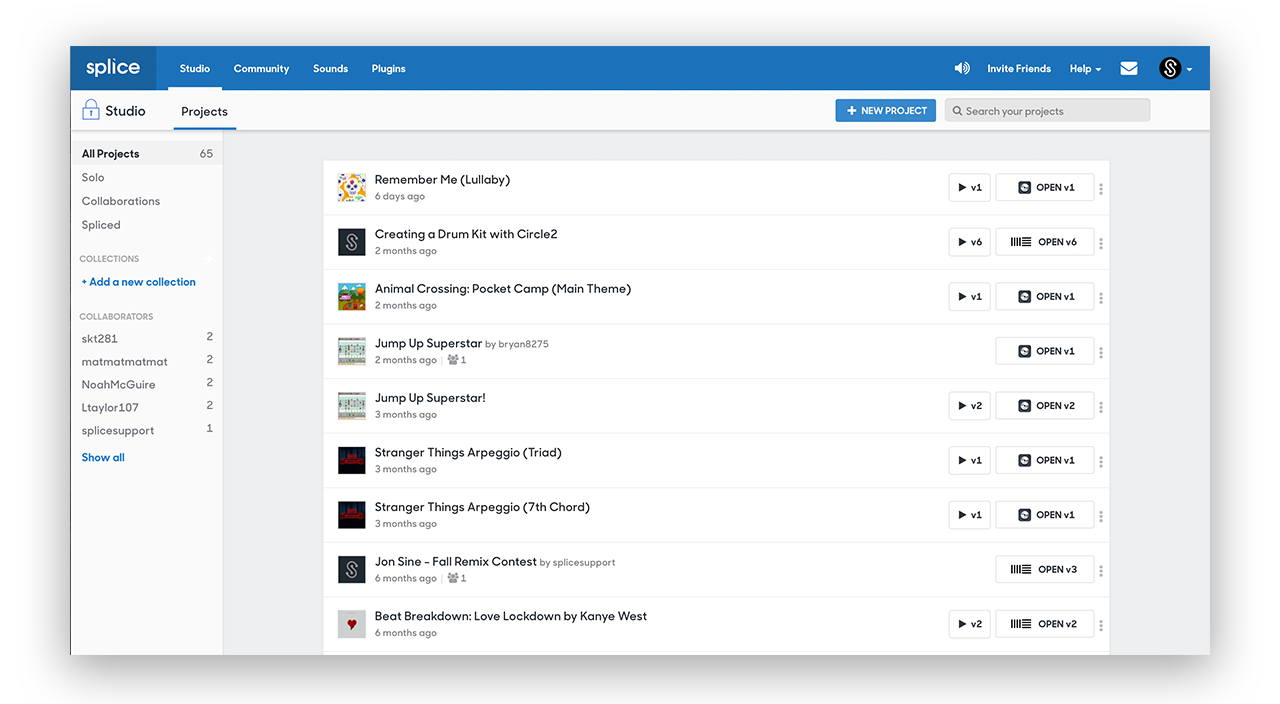
(Splice Studio on the web)
Tour stop #one: backing up your work
How do I get Splice to sync my work?
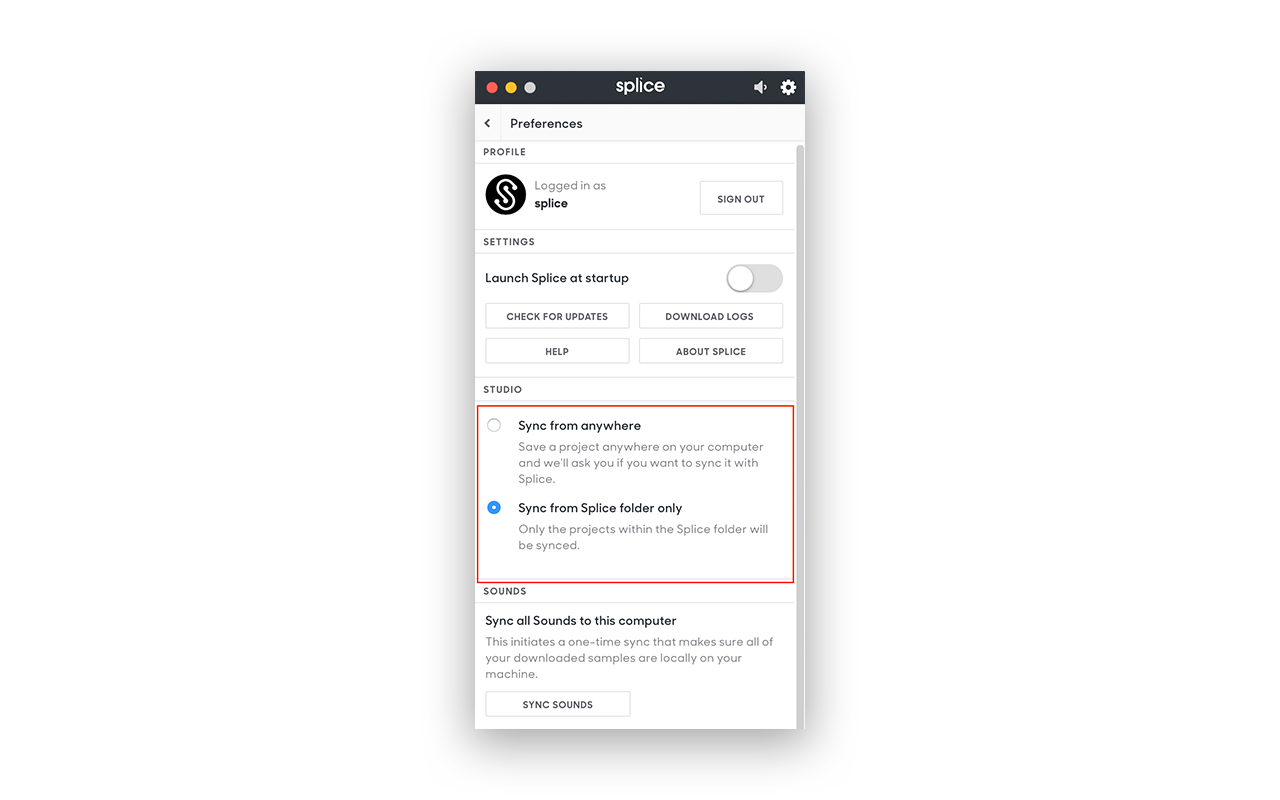
There are two options for how the Splice app syncs your projects, which you tin can change in the app's "Preferences" page:
- The first (and default) option is to sync projects using the Splice binder. After installing the app, a Splice binder and shortcut are automatically created. Save a DAW project into the Splice binder and the app volition automatically sync information technology – information technology's that easy. You can likewise drag and drib projects you've fabricated elsewhere into your Splice Binder to sync them.
- If you lot alter your preference to "Sync projects anywhere," Splice will enquire if you desire to continue a projection synced with the cloud when you save a projection anywhere on your figurer or external drive.
 Is my DAW supported past Splice? Are at that place DAW-specific things I should be aware of?
Splice Studio currently fully supports Ableton Live, Logic Pro X, GarageBand, and FL Studio. In that location are some nuances equally to what Splice Studio considers a new project for each DAW:
- Ableton Live: Every project binder will exist considered a new project in Splice. So, if yous accept one project binder with 10 .als files, saving whatsoever of those files volition update the same project. "Save as" into a new folder to create a new projection.
- Logic Pro Ten and GarageBand: Splice simply supports projects in the "packet" format, not the "folder" format. Every .logic and .band file will be considered a new project in Splice.
- FL Studio: every .flp file will be considered a new project in Splice.
Tour end #2: exploring the DNA role player
Once your work has been backed upwards to Splice Studio, you tin can add more than data to the backup by selecting the projection. This will bring y'all to a page that displays a Dna player, which is a characteristic that gives an insight into the essence, or DNA, of your rails.
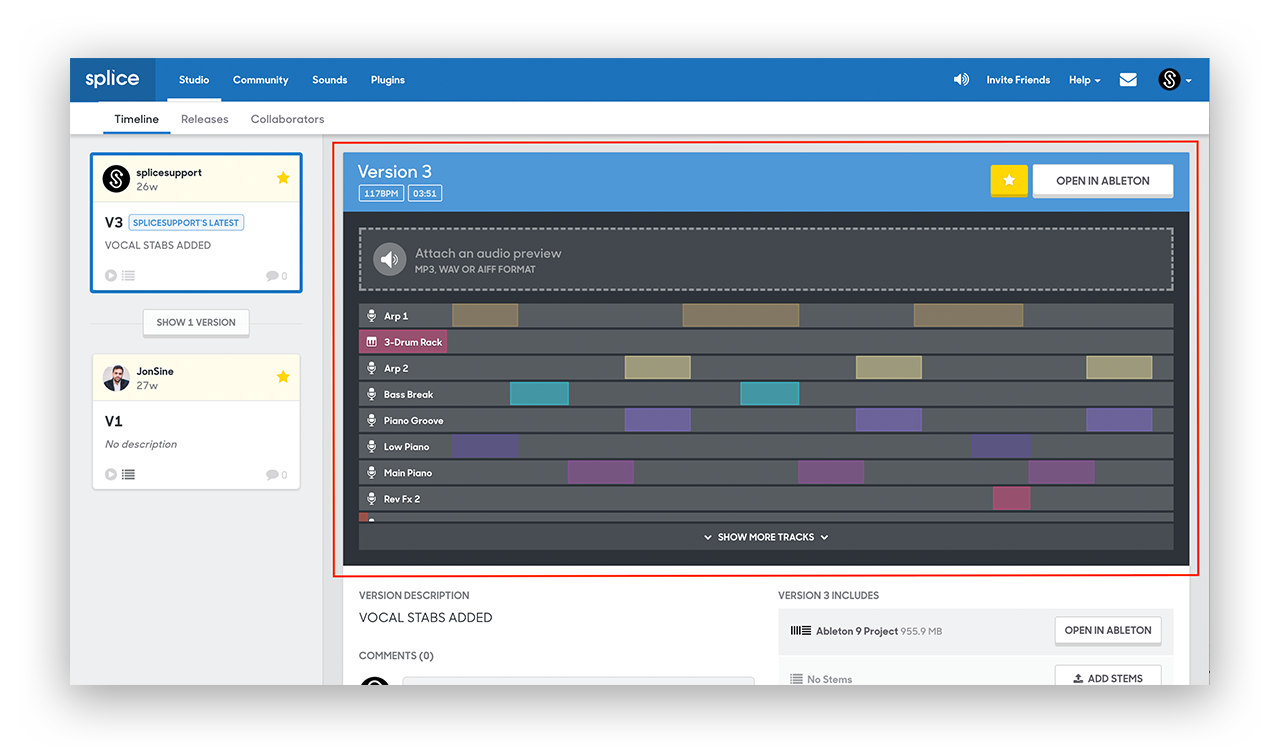
The DNA Thespian displays all of your individual tracks and the layout of unlike audio and MIDI regions, similar to how the project might appear in your DAW. Nevertheless, the Dna player is just a visual representation, and you can't use information technology to hear what's actually in the session – until you add stems, that is. You can add bounces of individual stems by striking the "Add STEMS" push button below the timeline. You can besides add a master sound track by striking the "Attach an sound preview" surface area located above the DNA thespian. After all of that'due south done, your project might look something like this:
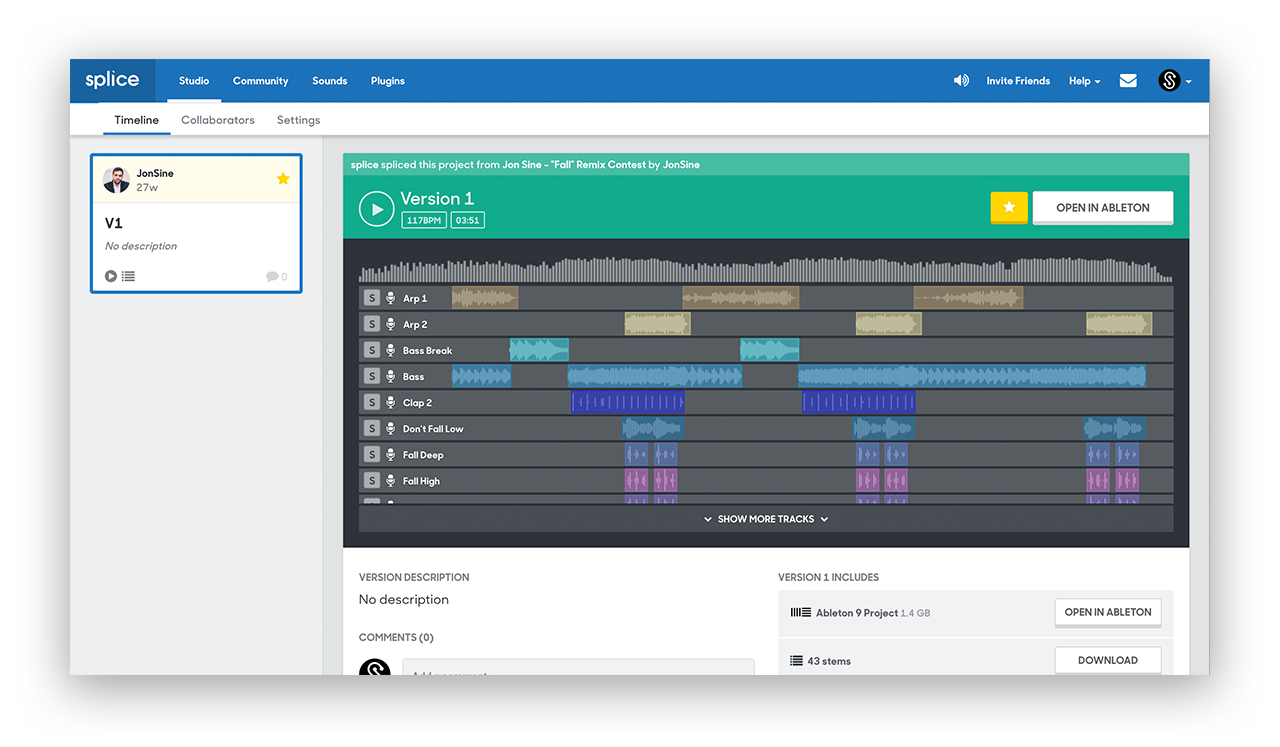
Adding these sound files will help you hands think what specific versions of your piece of work sounded like without having to open the project in your DAW, but information technology's as well a crucial matter to do if y'all make up one's mind to collaborate on a project (or if yous're looking to take information technology remixed past the greater community – learn more about creating and sharing your stems for this purpose here).
Tour stop #three: adding a collaborator
How do I collaborate on a projection using Splice Studio?
Select the "Collaborators" tab on your project and invite collaborators past electronic mail or username. If they're not already on Splice, they'll be invited to bring together. Your collaborators will be able to view and open whatsoever version on the Project Timeline.
What's the Project Timeline?
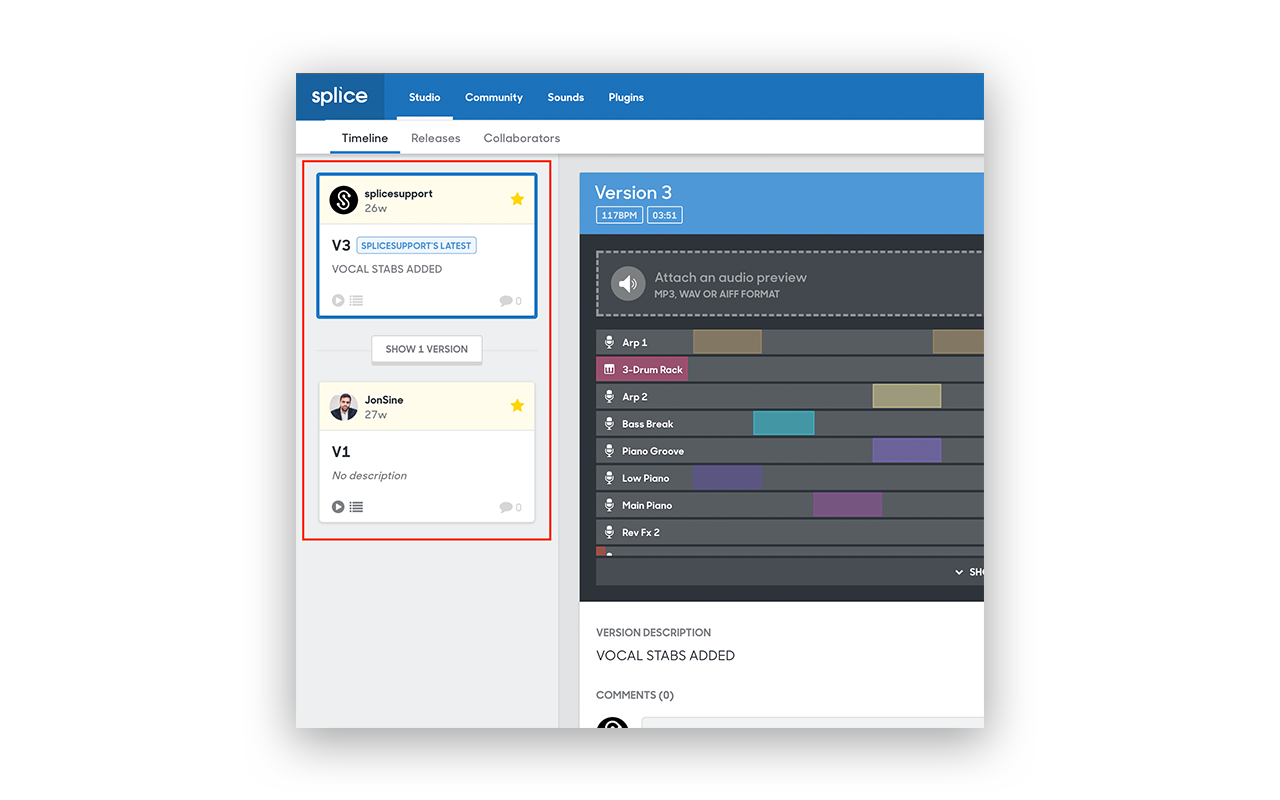
The Projection Timeline, located to the left of the DNA player, displays all of the unlike versions of the project that have been uploaded to Studio. Use it to see any new saves your collaborator made, or to navigate to an older version of the projection. Y'all can star versions and add descriptions and comments using the timeline to highlight of import saves.
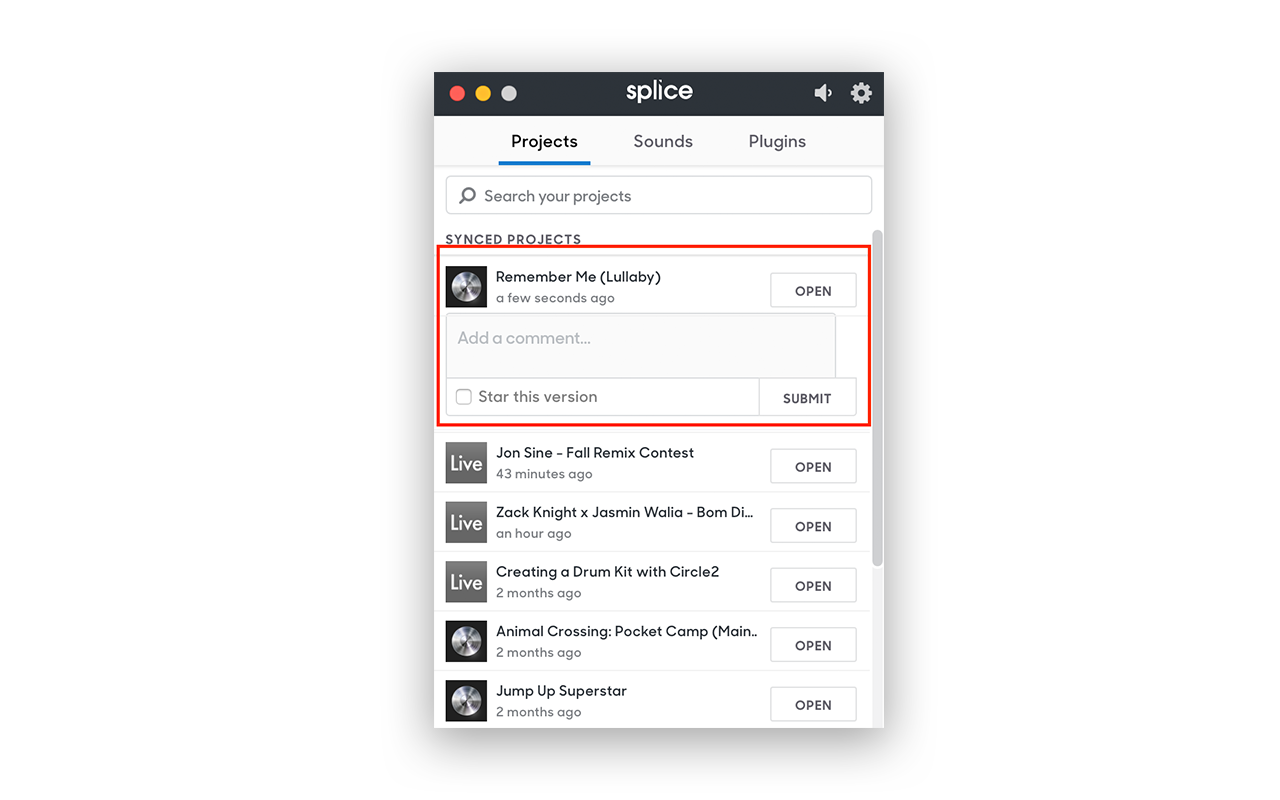
You can star versions and add comments when you make a new salve using the desktop app as well:
A collaboration pro-tip:
If you lot and your collaborator(s) don't own all of the same software instruments or plugins (which is likely the example), adding stems in important saves, along with a bounce of the overall projection, is always a good thought. This volition assistance in making sure that both you and your collaborator are hearing the same thing. We have a whole separate postal service dedicated to useful practices y'all can observe when information technology comes to creating stems for collaboration, but here are some quick tips to become you started:
- Creating stems in Ableton Live: Brand sure to select "All Tracks" in the Export settings.
- Creating stems in Logic Pro X: Rather than billowy, go to File → Export → All Tracks As Audio Files.
- Creating stems in FL Studio: Brand certain to select "Split mixer tracks" in the Export settings.
No matter what DAW you're using, exporting stems in mono is often a expert idea to brand mixing easier for your collaborator. If you have stereo tracks in your project, however, you may either desire to return those separately. Alternatively, uploading an audio-just project is an choice also, if you lot want to keep the Deoxyribonucleic acid of your project private when the track is released on Customs.
The terminal end: going public
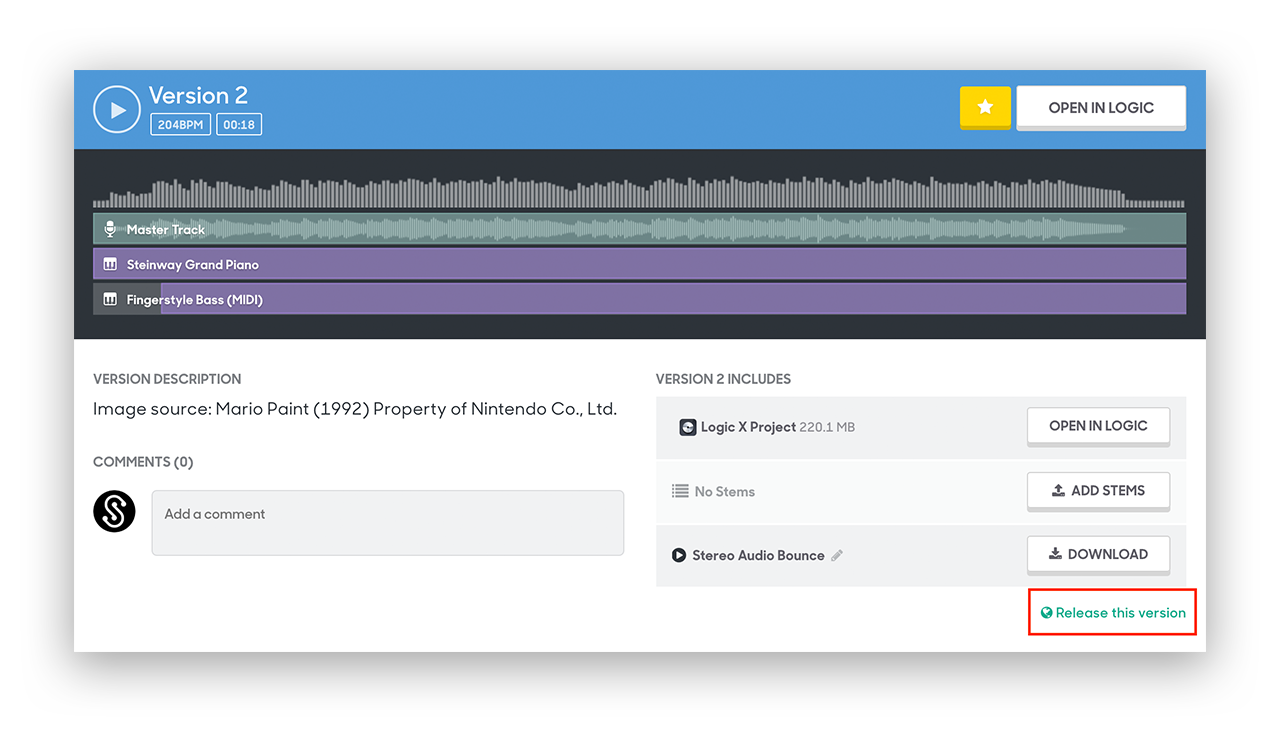
Your track that you lot've spent countless hours on is at long last consummate, fix to be remixed by the masses. Or, mayhap it's not quite at that place yet, and you're looking for vocals, a new department, or an improved mix. Whether you're simply looking to share your runway with the Splice community or searching for a collaborator or some production communication, releasing your projection is a great way to have some fresh ears to mind to your work. Releasing your project makes it viewable to the public on the "Explore" tab of Customs.
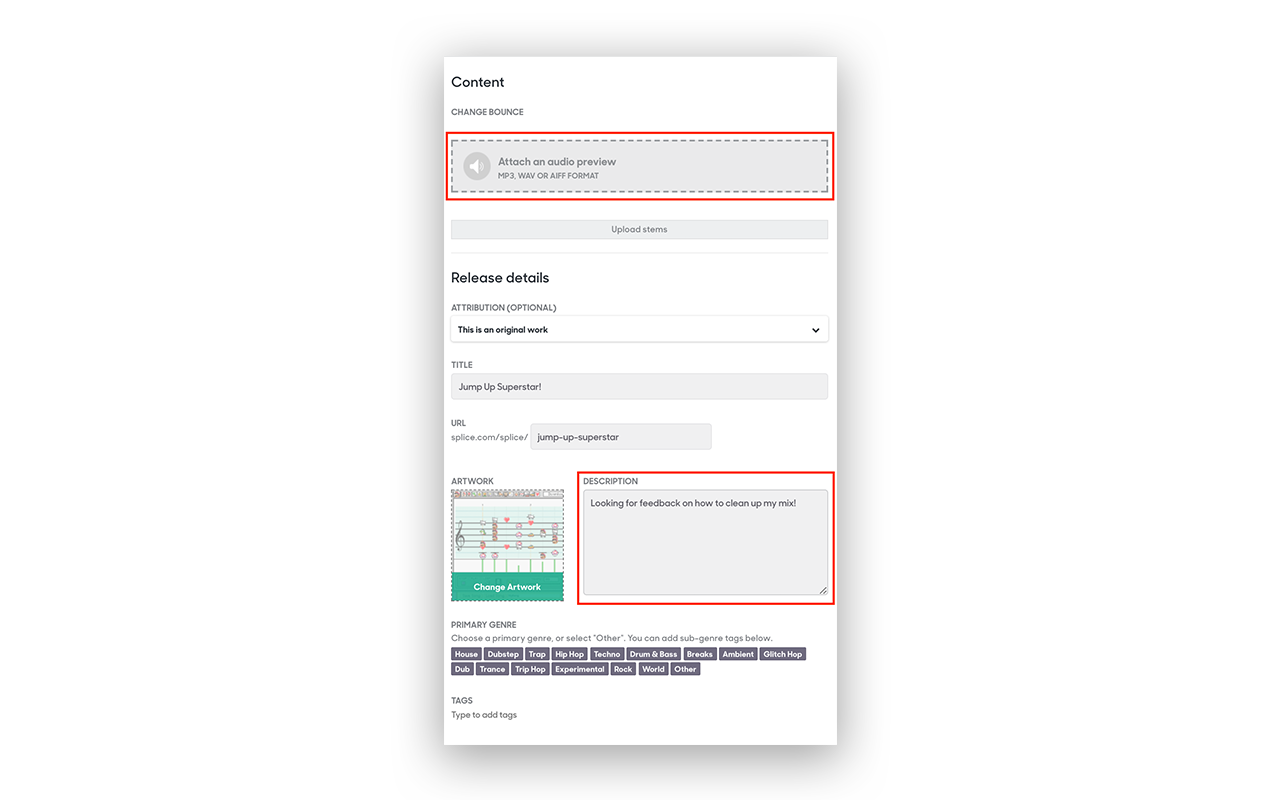
Attach an audio preview to your rails and add a description to communicate your intentions to listeners (ex. "Looking for a vocalist to collaborate with," "Seeking feedback to clean up low cease of mix," "Remix me!" etc). You'll be notified any time another producer splices you, and once more if they share an updated version of your song.
What does information technology mean to splice a projection? How does it piece of work?
Splicing lets you lot grab a release from the customs to learn from, remix, and work on. Maybe you want to see how an artist crafted a snare, or assistance someone else principal their track.
Simply visit Customs and click "SPLICE" on a release that you lot like. This will copy the projection into your Studio then y'all can open up information technology in your DAW and piece of work on it privately.
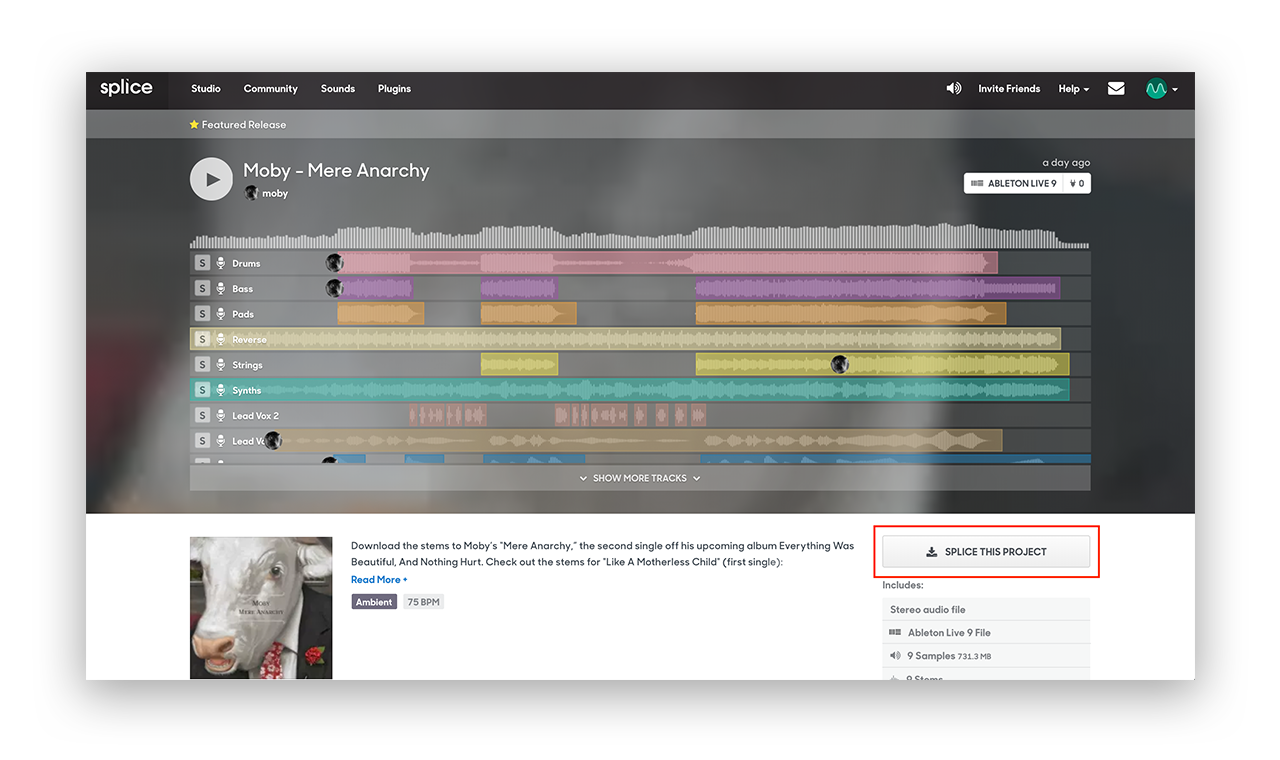
If you'd like to release your updated version back to the community, just create a release from the project'south page. The original creator will be notified and can cull to go on working from your version. Or, any of the other community members can take it in an entirely new direction!
Preparing your runway to be splice-able:
Setting upwards your track so it can be hands spliced by other producers requires fifty-fifty more clarity and organisation than when you're collaborating, because you don't fifty-fifty know who the other person may be. This makes adding comments, descriptions, and stems fifty-fifty more important than it was earlier. Naming your tracks so that they're easily decipherable is a good idea too (ex. "Lead Vocals" rather than "vclmixfinaltake_keep03"). Broadly speaking, air on the side of over-advice rather than under-advice; an anecdote of how you arrived to a particular mix decision may be straightforward to y'all just an eye-opening learning experience to somebody else!
Still have questions about Splice Studio? Let us know in the comments beneath!
February v, 2018
Source: https://splice.com/blog/how-to-use-splice-studio/
0 Response to "Slice Upload Fl Studio Files for Collaboration"
Post a Comment